Introduction
When people think about ancient civilizations, they often imagine the Egyptians, Romans, or Greeks. However, one of the most fascinating civilizations in the Americas was the Maya civilization. Many travelers visit Mexico and Central America every year to explore impressive pyramids, ancient cities, and archaeological sites, but they often ask the same question: who were the Mayas?
The Maya were an advanced civilization that lived in Mesoamerica for thousands of years. They developed remarkable knowledge in astronomy, mathematics, architecture, agriculture, engineering, and writing. Their cities became centers of culture, religion, science, and trade long before Europeans arrived in the Americas.
Although many people believe the Maya disappeared, this is not true. Today, millions of Maya descendants continue living in southern Mexico, Guatemala, Belize, Honduras, and El Salvador. They preserve many traditions, speak Maya languages, and proudly maintain an important part of their cultural heritage.
This guide explains who the Maya were, where they lived, how they built their cities, what they believed, and why they remain one of the world’s greatest ancient civilizations. You will also learn about their scientific achievements, daily life, and lasting influence on modern society.
If you would like to jump to a specific topic, you can read about where the Maya lived, their history, or their greatest achievements.
Who Were the Mayas?
The Maya were an ancient civilization that developed in Mesoamerica around 2,000 BC. They lived across a large region that today includes southern Mexico, Guatemala, Belize, western Honduras, and western El Salvador. Over thousands of years, they built magnificent cities, established trade networks, created complex calendars, and developed one of the most advanced writing systems in the ancient Americas.
Unlike civilizations that were united under a single emperor, the Maya lived in many independent city-states. Each city had its own ruler, government, temples, nobles, and military forces. These cities often traded with one another, formed alliances, and sometimes fought wars for power and influence.
The Maya reached their greatest cultural and scientific achievements during the Classic Period, between approximately AD 250 and AD 900. During this time, cities expanded rapidly, monumental temples were constructed, and scholars made important discoveries in mathematics and astronomy.
A Civilization of Independent City-States
Instead of creating one enormous empire, the Maya established hundreds of cities spread across different regions. Each city controlled nearby villages and farmland while sharing language, religion, artistic traditions, and scientific knowledge with other Maya communities.
Some of the most important Maya cities included:
- Tikal in present-day Guatemala.
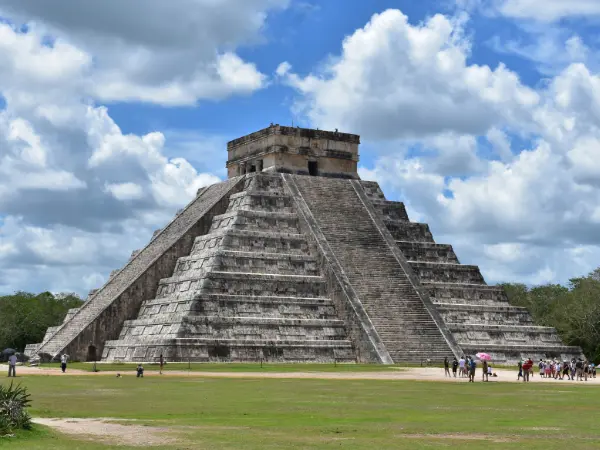
- Chichén Itzá in the Yucatán Peninsula.
- Calakmul in Campeche.
- Palenque in Chiapas.
- Copán in Honduras.
- Uxmal in Yucatán.
- Cobá in Quintana Roo.
Many of these archaeological sites remain open to visitors today and provide valuable information about Maya civilization.
The Maya Are Still Here
One of the biggest misconceptions is that the Maya completely disappeared. While many ancient cities were abandoned centuries ago, the Maya people survived and continue to thrive today. More than six million Maya descendants still live throughout Mesoamerica.
Many communities continue speaking Maya languages such as Yucatec Maya, K’iche’, Q’eqchi’, and Mam. Traditional clothing, ceremonies, farming methods, weaving techniques, and local cuisine remain important parts of everyday life.
Visiting a modern Maya community offers a unique opportunity to experience a living culture rather than simply learning about ancient history.
Where Did the Maya Live?
The Maya occupied one of the largest cultural regions in ancient America. Their territory covered approximately 324,000 square kilometers across different landscapes, including tropical rainforests, mountains, dry forests, rivers, wetlands, and coastal areas.
The Maya civilization extended across:
- Southern Mexico.
- The Yucatán Peninsula.
- Guatemala.
- Belize.
- Western Honduras.
- Western El Salvador.
Because these environments were so different, the Maya adapted their farming techniques, architecture, and daily life to each region.
The Yucatán Peninsula
The northern Maya region includes the modern Mexican states of Yucatán, Campeche, and Quintana Roo. Unlike other areas, this region has very few rivers. Instead, the Maya depended on natural freshwater sinkholes known as cenotes. These underground water sources provided drinking water and became important ceremonial places.
Some of the most famous archaeological sites in this region include Chichén Itzá, Cobá, Uxmal, Ek Balam, and Mayapán.
The Southern Lowlands
The dense rainforests of Guatemala, Belize, and southern Mexico became home to some of the largest Maya cities ever constructed. Massive pyramids, ceremonial plazas, royal palaces, and reservoirs were carefully planned to support growing populations.
Cities such as Tikal and Calakmul became political and economic centers connected through trade routes that stretched across Mesoamerica.
The Highlands
The volcanic highlands of Guatemala offered fertile soil that supported agriculture throughout the year. Communities in this region became well known for farming, trade, and craftsmanship while maintaining strong cultural connections with other Maya cities.
Maya History
The Maya civilization developed gradually over thousands of years. Archaeologists divide its history into several periods that help explain how villages evolved into powerful cities and how Maya society changed over time.
The Preclassic Period
The Preclassic Period began around 2000 BC, when small farming villages appeared throughout the Maya region. During these early centuries, people learned to cultivate maize, beans, squash, chili peppers, and other crops that became the foundation of their diet.
As agriculture improved, villages grew larger and more organized. Leaders coordinated religious ceremonies, managed resources, and supervised the construction of temples, plazas, and public buildings. These early communities laid the foundation for the great Maya cities that would flourish during the following centuries.
The Classic Period
The Classic Period, which lasted from about AD 250 to AD 900, is considered the golden age of the Maya civilization. During this time, many cities experienced rapid growth, and rulers invested in the construction of magnificent temples, palaces, ball courts, and ceremonial plazas. Skilled artists decorated buildings with sculptures, murals, and detailed carvings that recorded important historical events.
Powerful city-states competed for influence through trade, diplomacy, and military campaigns. Alliances between rulers could strengthen a city, while conflicts sometimes led to the decline of rivals. Despite these political struggles, the Classic Period was marked by extraordinary achievements in science, engineering, and the arts.
Many of the monuments built during this period contain inscriptions that allow archaeologists to reconstruct the lives of Maya kings, queens, and nobles. These records provide valuable information about wars, royal ceremonies, marriages, and important historical events.
The Postclassic Period
After around AD 900, many cities in the southern lowlands experienced political instability and population decline. However, this did not mean the end of Maya civilization. Instead, new centers of power emerged in northern Yucatán.
Cities such as Chichén Itzá and later Mayapán became important commercial and political centers. Trade expanded across Mesoamerica, connecting the Maya with many neighboring cultures. Coastal trade routes became increasingly important, allowing merchants to transport valuable goods over long distances.
When the Spanish arrived during the sixteenth century, many Maya kingdoms still existed and continued resisting conquest for decades.
How Maya Society Was Organized
Maya society had a well-defined social structure. Every person had responsibilities that helped the community function efficiently. Although life differed between cities, most Maya kingdoms followed a similar social organization.
Rulers and Nobles
Each city-state was governed by a king, often considered a representative of the gods on Earth. Kings directed military campaigns, organized religious ceremonies, managed alliances, and supervised major construction projects.
Noble families assisted the ruler by serving as military leaders, judges, government officials, and administrators. They also received education in writing, astronomy, and religion.
Priests and Scholars
Religion played a central role in Maya life, making priests some of the most respected members of society. They carefully observed the movement of the Sun, Moon, planets, and stars to determine the best dates for ceremonies, agriculture, and political events.
Many priests were also scholars who preserved knowledge about mathematics, astronomy, medicine, and the Maya calendar.
Farmers, Merchants, and Artisans
The majority of Maya people worked as farmers. They cultivated maize, beans, squash, cacao, avocados, tomatoes, chili peppers, and many other crops. Agriculture supported both villages and large cities.
Artisans produced beautiful pottery, jewelry, sculptures, textiles, masks, and painted ceramics. Their work demonstrated remarkable creativity and technical skill.
Merchants traveled long distances exchanging valuable products such as jade, obsidian, cacao beans, salt, feathers, shells, cotton, and ceramics. These trade networks connected distant regions and allowed ideas as well as goods to spread across Mesoamerica.
Maya Religion and Beliefs
Religion influenced nearly every aspect of Maya life. Their beliefs explained the creation of the world, the movement of celestial bodies, the changing seasons, and the relationship between humans and nature.
Many Gods and Goddesses
The Maya worshipped many different gods associated with rain, the Sun, the Moon, agriculture, storms, death, and fertility. Different cities sometimes emphasized particular deities, but many religious traditions were shared across the Maya world.
Religious ceremonies often included music, dancing, offerings, incense, and prayers asking the gods for rain, successful harvests, health, and protection.
Sacred Places
Temples stood at the center of most Maya cities and served as places for ceremonies and public gatherings. Mountains, caves, rivers, and cenotes were also considered sacred because they were believed to connect the human world with the spiritual world.
Some cenotes, especially in the Yucatán Peninsula, became important ceremonial locations where offerings were made to honor the gods.
Maya Achievements
The Maya are remembered not only for their impressive cities but also for their remarkable intellectual achievements. Their discoveries continue to amaze historians, archaeologists, mathematicians, and astronomers.
Writing System
The Maya developed one of the most advanced writing systems in the ancient Americas. Their script combined hundreds of symbols known as glyphs that represented words, sounds, or ideas.
Scribes carefully recorded historical events, royal family histories, religious ceremonies, and astronomical observations on stone monuments, pottery, murals, and bark-paper books called codices.
Modern researchers have successfully deciphered much of the Maya writing system, allowing us to understand their history directly from their own records.
Mathematics
Maya mathematicians created a sophisticated numbering system based on the number twenty. One of their greatest achievements was the use of the concept of zero, an innovation that appeared independently from many other ancient civilizations.
This mathematical knowledge helped them perform complex calculations related to astronomy, architecture, calendars, and trade.
Astronomy
The Maya closely observed the sky for centuries. They accurately tracked the movements of the Sun, Moon, Venus, and other celestial bodies. Their observations allowed them to predict eclipses, calculate seasonal changes, and create highly accurate calendars.
Astronomy also guided farming activities and religious ceremonies, making it one of the most important sciences in Maya society.
Architecture
Maya architecture continues to impress visitors around the world. Their builders constructed enormous pyramids, royal palaces, observatories, temples, reservoirs, defensive walls, and ceremonial plazas using limestone and carefully planned engineering techniques.
Many buildings were aligned with astronomical events such as the solstices and equinoxes, demonstrating the close relationship between architecture, religion, and astronomy.
Daily Life in the Maya World
Although the Maya are often remembered for their temples and pyramids, everyday life was centered on family, farming, and community. Most people lived in small villages surrounding the larger cities and worked together to produce food, build homes, and participate in religious celebrations.
Families usually lived in simple houses made from wood, stone, and thatched roofs. Several generations often shared the same household, and daily responsibilities were divided among family members.
Food and Agriculture
Agriculture was the foundation of Maya society. Farmers developed effective techniques to grow crops in different environments, from tropical forests to volcanic highlands. Their knowledge allowed large populations to thrive for centuries.
The most important crop was maize, which held both practical and spiritual significance. According to Maya beliefs, humans were created from maize, making it a sacred food.
Other important crops included:
- Beans.
- Squash.
- Chili peppers.
- Tomatoes.
- Avocados.
- Cacao.
- Papaya.
- Cotton.
The Maya also hunted deer, turkeys, rabbits, and other animals while fishing in rivers, lakes, and coastal waters.
Trade and Economy
Trade connected hundreds of Maya communities. Merchants traveled by land and by canoe, transporting valuable goods across long distances. Markets became lively gathering places where people exchanged products, news, and ideas.
Some of the most valuable trade items included jade, obsidian, salt, cacao beans, colorful feathers, shells, ceramics, textiles, and precious stones. Cacao beans were so valuable that they were sometimes used as a form of currency.
Why Did the Maya Civilization Decline?
One of the greatest mysteries in archaeology is why many large Maya cities were abandoned after the Classic Period. For many years, people believed the Maya suddenly disappeared, but modern research has shown that the explanation is much more complex.
Most experts believe several factors contributed to the decline of many southern cities rather than a single event.
Possible Causes
Researchers suggest that the decline may have resulted from a combination of environmental, political, and social challenges. Long periods of drought likely reduced food production, while growing populations placed increasing pressure on natural resources.
At the same time, wars between rival city-states became more frequent, weakening political stability. Trade networks also changed, causing some cities to lose economic importance.
Rather than disappearing, many Maya communities simply moved to different regions, especially northern Yucatán, where new cities continued to flourish.
The Maya Never Disappeared
Today, historians emphasize that the Maya civilization did not vanish. Although many ancient cities were abandoned, the Maya people continued living throughout Mesoamerica. Their descendants preserved their languages, traditions, beliefs, and cultural identity despite centuries of change.
Millions of Maya people continue to contribute to the cultural diversity of Mexico and Central America.
The Legacy of the Maya
The Maya left behind one of the richest cultural legacies in the Americas. Their achievements continue to influence archaeology, history, mathematics, architecture, astronomy, and anthropology.
Archaeological sites such as Chichén Itzá, Tikal, Palenque, Uxmal, Calakmul, Cobá, and Copán attract millions of visitors every year. These remarkable cities provide insight into the creativity and knowledge of ancient Maya society.
Beyond archaeology, the Maya legacy lives on through modern communities that continue speaking Maya languages, preparing traditional foods, creating handmade textiles, celebrating festivals, and preserving customs that have existed for centuries.
Learning about the Maya is not only a journey into the past but also an opportunity to appreciate one of the world’s oldest living cultures.
Conclusion
Understanding who were the Mayas means discovering far more than an ancient civilization. The Maya developed sophisticated cities, advanced mathematics, detailed calendars, remarkable architecture, and an impressive writing system that continues to fascinate researchers today.
Although many of their ancient cities were eventually abandoned, the Maya people never disappeared. Their descendants continue to live throughout Mexico and Central America, keeping their languages, traditions, and cultural identity alive.
Whether you are exploring the pyramids of Chichén Itzá, walking through the rainforest ruins of Tikal, or visiting a modern Maya community, you are experiencing the legacy of a civilization whose influence continues to shape the history and culture of the region.